
Ground Cleared for Future Use
Stump Removal & Mulching in Apex for properties with tree removal remnants blocking construction or landscaping plans
Stumps remaining after tree removal prevent foundation excavation, interfere with grading equipment, and occupy space intended for driveways, patios, or planted areas—creating obstacles that force design compromises or expensive workarounds. The grinding process reduces stumps to wood chips below grade level, eliminating the structural obstruction while leaving behind material that decomposes naturally without affecting future construction. Pinesouth Earthworks grinds stumps and mulches vegetation across properties in Apex, clearing the way for building projects, landscape installations, and lawn expansions that require unobstructed, level ground.
Stump grinding involves using rotating cutting teeth to break down wood tissue in progressively deeper passes, continuing until the stump is ground six to twelve inches below the surrounding soil surface. Mulching services manage brush piles, limbs, and undergrowth by chipping vegetation into uniform pieces suitable for pathway coverage or disposal. Both services address the accumulated plant material that results from land clearing, storm cleanup, or selective tree removal, preventing decay piles that attract pests or create tripping hazards during subsequent work.
Request a property evaluation to identify stumps and vegetation requiring removal before your landscaping or construction work begins.
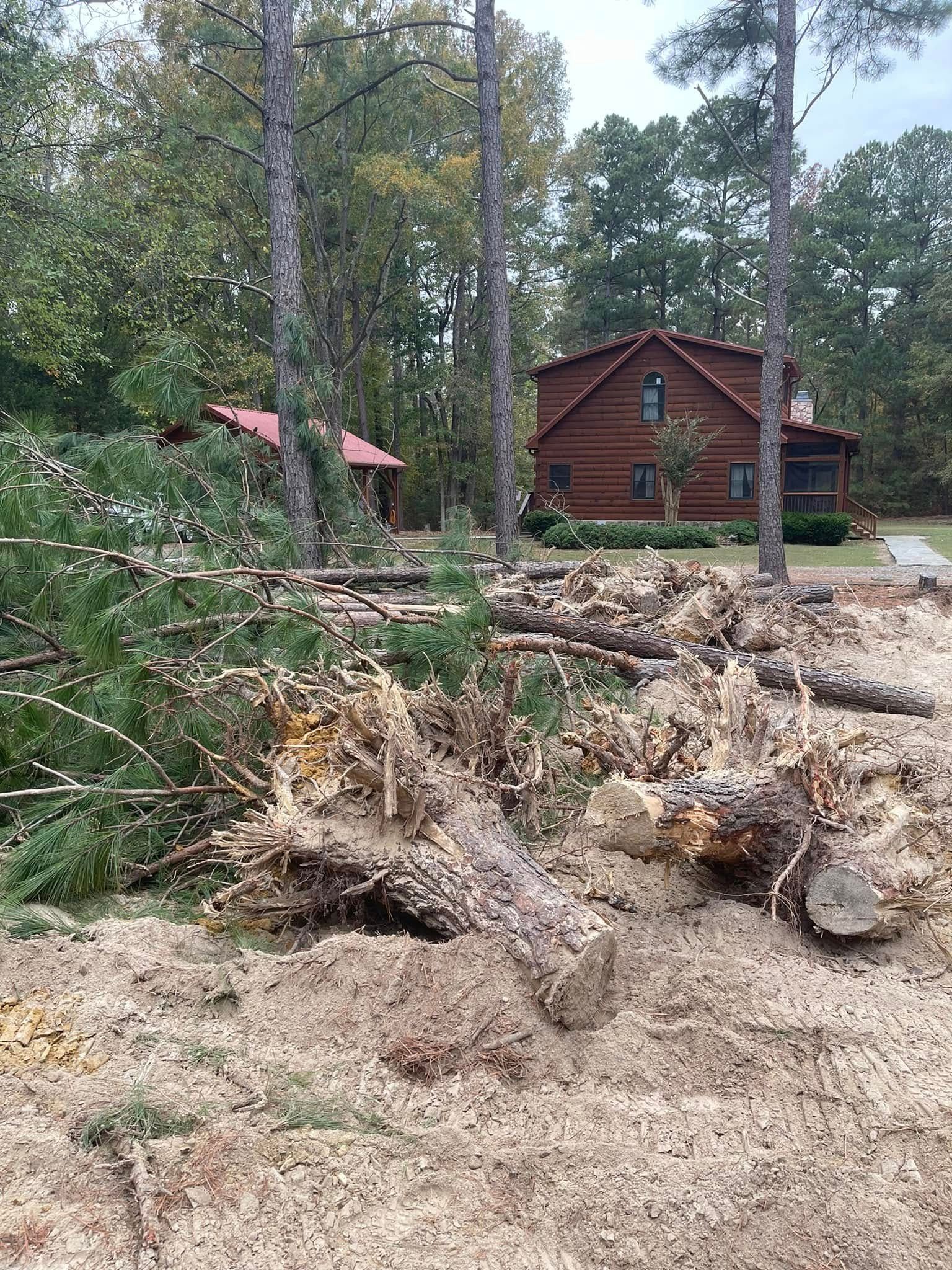
What Stump Grinding Accomplishes
Grinding equipment accesses stumps in locations where excavation would be impractical—near buildings, within fenced yards, or on slopes where heavy machinery cannot operate safely. The machine's cutting wheel moves laterally across the stump face, pulverizing wood rather than pulling or lifting the entire root mass. Grinding depth is adjusted based on what will eventually occupy the space: shallow grinding suffices for mulched areas, while deeper grinding is necessary where concrete will be poured or heavy equipment will travel. The resulting wood chips can be raked into surrounding beds as organic mulch or removed if a clean grade is required.
After stump removal and mulching are completed, you can grade the area to match surrounding elevations without encountering buried obstructions, install fencing or structures along property lines previously blocked by stumps, and mow or landscape without navigating around decaying wood that would persist for years if left in place. The ground compacts more uniformly without voids left by decomposing root systems, reducing the settling that creates low spots in lawns or causes pavement to crack when laid over unremoved stumps.
Some projects involve removing multiple stumps in preparation for regrading an entire yard, while others target individual stumps blocking specific features like patio corners or utility line paths. Mulched brush can supplement existing landscaping beds or be hauled away depending on volume and your need for organic ground cover. Properties transitioning from wooded to open lawn often generate both stumps and large quantities of limbs requiring coordinated removal and chipping to avoid multiple service visits.
Common Questions About This Service
Stump removal raises practical concerns about equipment access, timing relative to other site work, and what remains after grinding is finished.
What happens to the wood chips produced during stump grinding?
Chips can be spread across the ground where the stump was located to fill the depression, used as mulch in other areas of your property, or removed entirely if you need the area cleared for construction or sod installation. The volume of chips typically exceeds the visible stump size due to the below-grade root mass being ground as well.
How close to structures or fences can stumps be ground?
Equipment can typically work within a few feet of buildings, walls, and fences, though the approach angle may limit grinding depth on the side nearest the obstruction. Stumps directly against foundations may require partial grinding or alternative removal methods to avoid structural contact.
When should stump removal occur relative to grading or landscaping?
Grinding should happen after tree removal but before final grading begins, allowing the ground to be leveled and compacted uniformly without later disturbance. Delaying removal until after grading forces rework of finished surfaces and risks equipment damage to new installations.
Why does vegetation mulching matter for site preparation in Apex?
Chipping brush and limbs reduces volume significantly, making disposal more efficient and creating reusable material for erosion control or bed coverage. Properties with dense undergrowth generate large piles that would otherwise require multiple hauling trips if not processed on-site.
What site conditions affect stump grinding difficulty?
Stumps on slopes, in rocky soil, or surrounded by obstacles like irrigation lines require more careful work and may take longer to grind completely. Hardwood species such as oak produce denser wood that dulls cutting teeth faster than softer pine stumps common in this region.
Pinesouth Earthworks removes stumps and mulches vegetation to prepare properties for construction, landscaping, or improved maintenance access. Schedule an assessment to determine grinding depth and mulching needs for your site preparation project.