
Access Routes Designed to Last
Roads & Driveways in Apex for properties needing durable vehicle access across varied terrain
Grading, base preparation, and drainage design determine whether a driveway remains passable after heavy rain or develops ruts, potholes, and washouts within a few seasons. Proper roadbed construction accounts for soil bearing capacity, water flow patterns, and traffic loads before surfacing material is placed. Pinesouth Earthworks builds roads and driveways in Apex where residential, farm, and commercial properties require reliable access that withstands seasonal weather and prevents erosion from undermining the roadbed.
Construction begins with subgrade preparation, removing unsuitable soil and compacting stable material to prevent settling under vehicle weight. Aggregate base layers are spread and compacted to specified depths, while crowned surfaces and ditches direct water off the driving surface before it saturates the roadbed. Final surfacing uses gravel, asphalt, or concrete depending on budget, traffic volume, and aesthetic goals.
Request a site evaluation to determine base requirements and drainage solutions for your access route.
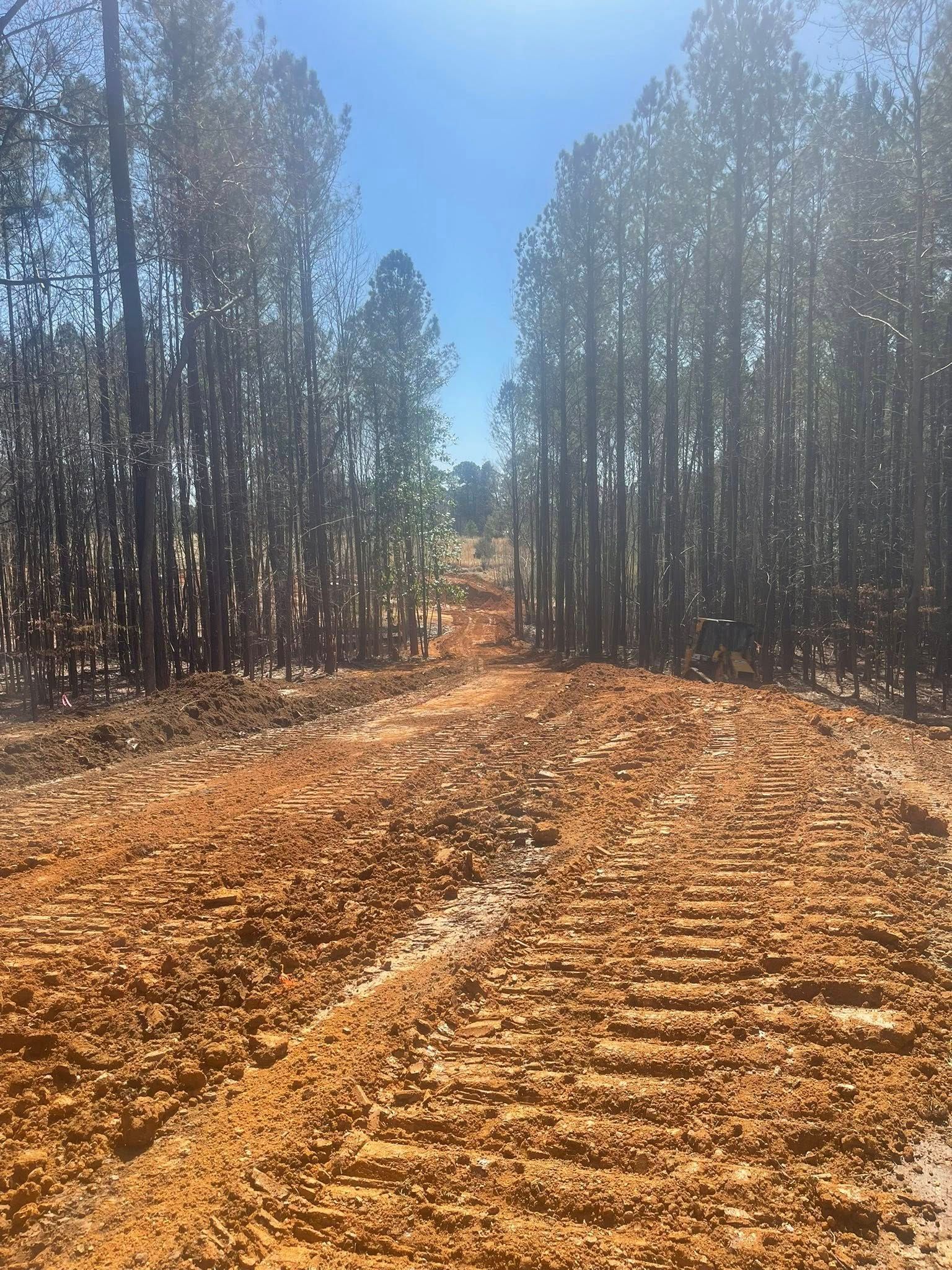
The Difference Between Temporary and Permanent Access Construction
Base preparation involves excavating soft topsoil and organic material that compresses unevenly, then replacing it with crushed stone or dense-grade aggregate that locks together under compaction. Roadbed thickness varies based on soil type, as clay subgrades require thicker bases than sandy soils to distribute loads without rutting. Side ditches or culverts are installed to intercept surface runoff and groundwater seepage, preventing saturation that weakens the aggregate and causes potholes or washboarding over time.
After construction completes, you'll notice a firm, well-drained surface that remains stable during wet weather and supports vehicle traffic without forming ruts or soft spots. Water sheds to the edges rather than pooling in the wheel paths, and the roadbed maintains its crown shape instead of settling unevenly. Access routes transition from muddy, impassable tracks to all-weather surfaces that function year-round without constant regrading or fresh gravel applications.
Driveway projects also involve deciding between permeable and impermeable surfaces, as gravel allows infiltration while asphalt and concrete require additional drainage structures to handle runoff. Some installations include geotextile fabric beneath the aggregate to prevent base material from mixing with subgrade soil, which extends service life in areas with poor native drainage. Curve banking and grade adjustments improve safety on sloped or winding routes where vehicles need traction and visibility.
What Property Owners Usually Ask
Driveway and road construction raises questions about material choices, long-term durability, and how to prevent the common failures that plague poorly built access routes.
What base depth is required for driveways in the Apex area?
Clay soils typical in central North Carolina generally require eight to twelve inches of compacted aggregate base, while sandy soils may need less depending on bearing capacity and expected traffic loads.
How does proper drainage prevent driveway deterioration?
Crowned surfaces shed water to ditches or swales before it infiltrates the base, and culverts pass runoff under the roadbed without allowing flow to undercut or erode the aggregate supporting the surface.
What maintenance extends the lifespan of gravel driveways?
Periodic regrading smooths washboard patterns and redistributes displaced stone, while adding fresh aggregate replaces material lost to traffic displacement and erosion during heavy rain.
When should asphalt or concrete be chosen over gravel?
Paved surfaces make sense for high-traffic residential driveways or commercial access where dust control, aesthetics, and minimal maintenance justify the higher installation cost compared to aggregate.
How are steep grades managed to prevent erosion and loss of traction?
Geotextile reinforcement, increased base depth, and water diversion structures prevent washouts on slopes, while surface texturing or alternative materials improve vehicle traction on inclines.
Pinesouth Earthworks designs road and driveway construction to match soil conditions, drainage patterns, and traffic demands specific to each property. Contact us for project estimates and recommendations on access route improvements.