
Structures That Hold Ground and Add Function
Retaining Walls & Hardscapes in Apex for sloped properties and outdoor spaces requiring erosion control
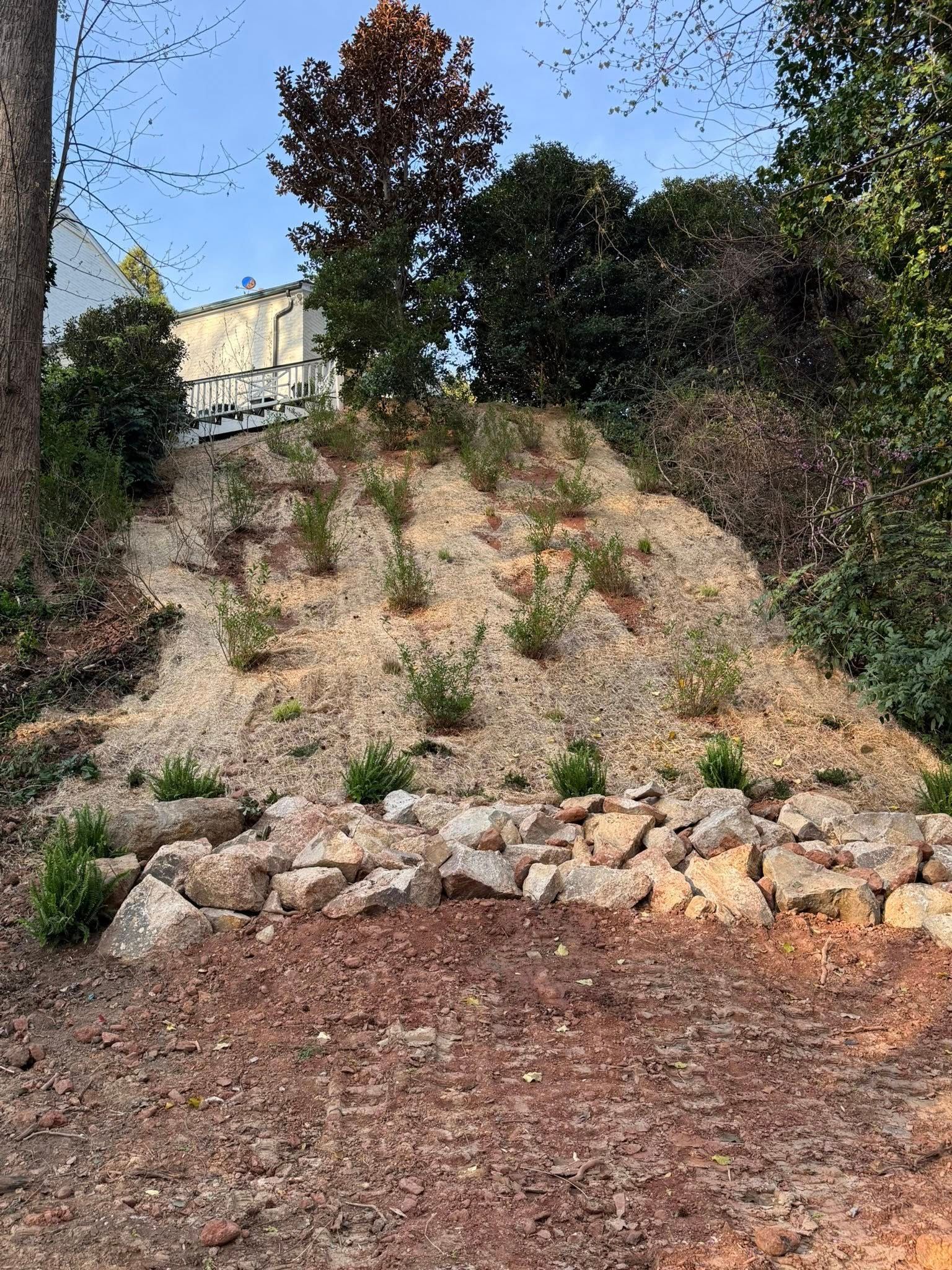
Pinesouth Earthworks builds retaining walls and hardscape features that stabilize sloped terrain while creating additional outdoor living space on properties throughout Apex. When you notice soil washing away after heavy rain or find portions of your yard unusable due to steep grades, retaining wall construction addresses both the structural problem and the functional limitation. The combination of engineered support and intentional design transforms unstable slopes into terraced areas suitable for patios, walkways, or planted beds.
Retaining wall construction involves excavating to stable soil, installing base materials that provide drainage behind the wall, and building upward with materials selected for both load-bearing capacity and visual compatibility with your property. Hardscape features such as stone pathways, paver patios, and decorative borders integrate with retaining structures to define outdoor spaces and manage foot traffic across previously uneven ground. The design process accounts for water movement, soil type, and the intended use of each terraced level.
Schedule a property evaluation to review slope conditions and discuss material options for your retaining wall project.
How Retaining Structures Change Property Use
Proper retaining wall installation begins with understanding the forces acting on the structure—soil pressure from uphill, water saturation during storms, and the weight of anything placed on the retained area. The wall must resist these forces through a combination of base width, material weight, and drainage systems that prevent hydrostatic pressure buildup. Material options range from stacked stone and timber to modular concrete blocks, each offering different aesthetic qualities and structural characteristics suited to specific height requirements and design goals.
After retaining walls and hardscapes are completed, you gain access to portions of your property that were previously too steep for regular use, notice that soil no longer migrates downhill during rain events, and find that outdoor spaces connect more logically through defined pathways and level transitions. Water moves along planned drainage routes rather than cutting channels through exposed soil. Hardscape surfaces remain stable underfoot and require minimal maintenance compared to turf or mulch in high-traffic areas.
Retaining wall projects often include decisions about wall height, setback from property lines, and whether to incorporate seating elements or lighting into the hardscape design. Taller walls may require engineering certification depending on local regulations, while shorter terrace walls can be installed in series to manage significant elevation changes. The choice of capping material affects both the finished appearance and the wall's resistance to weathering over time.
What Property Owners Usually Ask
Retaining wall and hardscape projects raise practical questions about materials, site conditions, and long-term performance, especially for properties where slope stability directly affects building foundations or drainage patterns.
What determines the material choice for a retaining wall?
The decision depends on wall height, soil conditions, drainage requirements, and the visual style you want to achieve. Modular concrete blocks interlock for added stability on taller walls, while natural stone offers varied texture and color that weathers gradually without appearing worn.
How does clay soil in the Apex area affect retaining wall construction?
Clay retains water and expands when saturated, creating significant pressure against retaining structures. Proper installation includes gravel backfill and drainage pipes that redirect water away from the wall, preventing the hydrostatic buildup that causes many retaining wall failures in this region.
What maintenance do retaining walls and hardscapes require?
You should inspect for any shifting or settling after heavy storms, keep drainage outlets clear of debris, and remove vegetation growing in joints before roots can displace materials. Sealed pavers benefit from occasional resealing, while stone surfaces typically need only periodic cleaning.
When should hardscape features be installed relative to other landscaping work?
Retaining walls and pathways establish the permanent structure of your outdoor space and should be completed before planting beds are added or irrigation systems installed, ensuring that grading and drainage function as intended across the entire property.
What site preparation is required before retaining wall construction begins?
The area must be cleared of vegetation, existing soil tested for stability, and utility lines marked to avoid conflicts during excavation. If the slope shows signs of active erosion or previous failure, additional soil stabilization may be needed before wall construction can proceed safely.
Pinesouth Earthworks evaluates site conditions and develops retaining wall solutions suited to the specific slope, soil type, and intended use of your outdoor space. Request a project consultation to review design options and material selections for your property.