
Site Work That Prepares Properties for What's Next
Excavation in Apex for properties requiring grading, utility access, or development preparation
Pinesouth Earthworks handles excavation for residential, agricultural, and commercial properties in Apex where site preparation determines whether a project starts on solid ground or runs into costly delays. The service addresses situations where land must be cleared to specific grades, utilities need accessible trenches, or development requires precise earth removal before construction begins. Careful planning before digging begins prevents damage to existing infrastructure and ensures the site matches engineering requirements.
Excavation involves removing soil and rock to create the foundation for driveways, buildings, ponds, drainage systems, or utility installations. Equipment operation follows site plans that account for soil composition, existing utilities, and final grade requirements. Each project requires evaluating underground conditions and surface drainage patterns to determine dig depth, slope angles, and equipment access routes.
Schedule a property evaluation to identify specific grading and excavation requirements for your project.
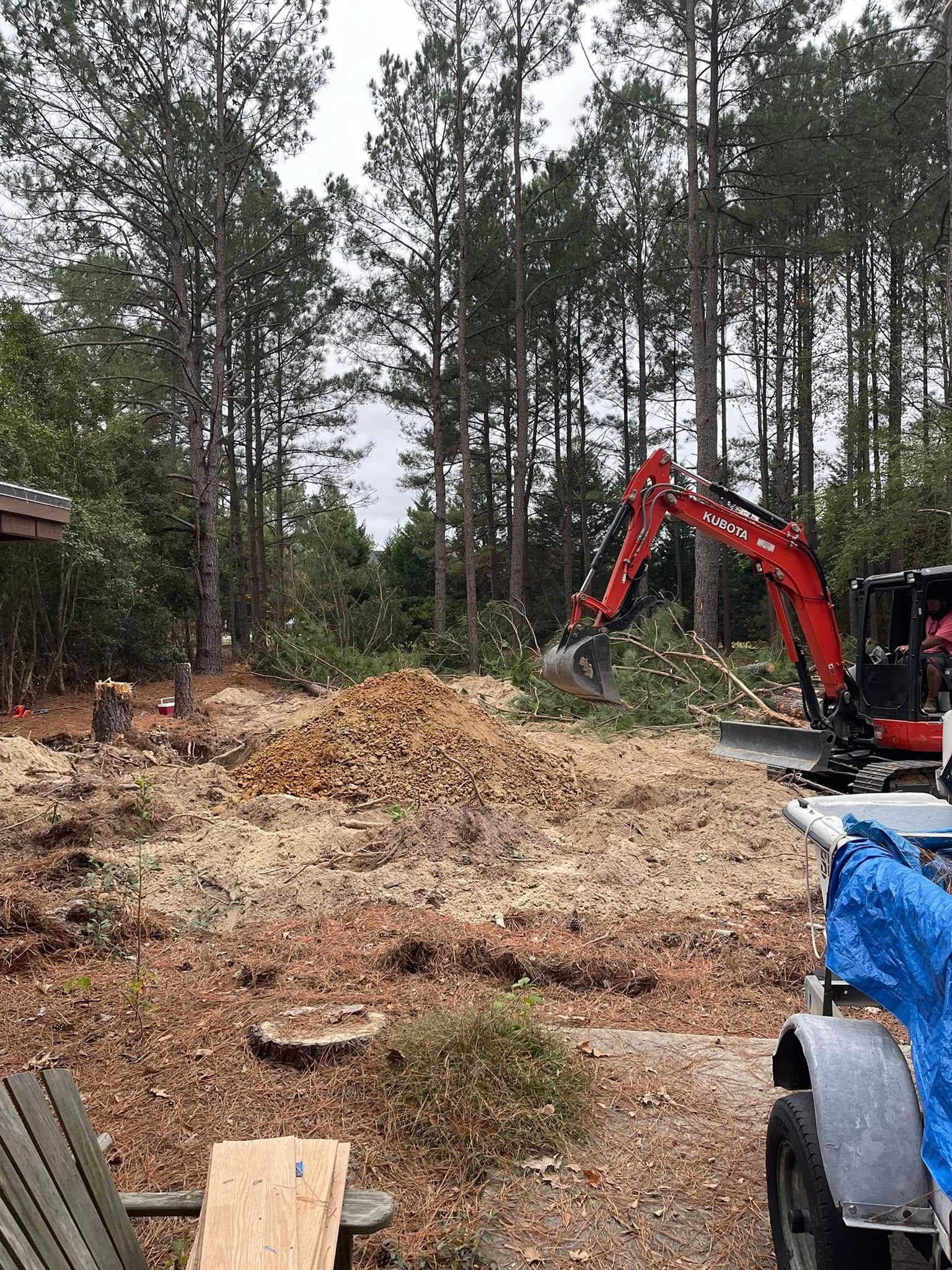
What Proper Site Excavation Requires
Site preparation begins with locating underground utilities and assessing soil stability to prevent cave-ins or damage to water lines, gas mains, and electrical conduits. Operators mark dig zones, establish haul routes for removed material, and set grade stakes that guide excavation depth across the entire work area. Compact soil gets loosened methodically while unstable areas receive temporary shoring or slope adjustments.
Once excavation finishes, you'll see a site that matches engineered specifications with stable slopes, proper drainage flow, and accessible utility corridors. The ground surface sits at the correct elevation for construction to proceed without additional grading corrections. Areas designated for foundations, roadbeds, or pond basins are shaped to dimensions that support the next phase of work without settlement issues or water pooling.
Excavation projects also account for material disposal or redistribution, as removed soil often gets spread in low areas of the same property to minimize hauling costs. Some projects require importing fill material when native soil doesn't compact adequately or when final grades demand more volume than excavation produces. The process includes compaction testing in situations where structural loads will bear on the prepared surface.
Questions Property Owners Usually Ask
Excavation work raises practical concerns about timing, site access, and how the process affects surrounding property features.
What happens before excavation equipment arrives on site?
Utility locates are completed, access routes are cleared, and grade stakes are placed to mark dig boundaries and final elevations across the work area.
How does soil type in the Apex area affect excavation planning?
Clay-heavy soils common in central North Carolina require different equipment and techniques than sandy or loamy ground, as clay compacts differently and holds water longer after rain events.
When should excavation be scheduled to avoid weather delays?
Late spring through early fall typically offers the most consistent ground conditions, though winter excavation is possible when the ground isn't frozen or saturated from prolonged rainfall.
What determines whether excavated material stays on site or gets hauled away?
The volume of material removed, available space for redistribution, and soil quality all influence disposal decisions, as contaminated or unsuitable soil requires off-site disposal while clean fill can often be reused.
How is final grade verified after excavation is complete?
Laser levels and grade stakes confirm that excavated areas match design elevations, ensuring proper drainage and structural support for subsequent construction phases.
Pinesouth Earthworks evaluates site-specific conditions before equipment mobilization to prevent underground utility strikes and ensure excavation work aligns with project timelines. Request a detailed estimate based on your property's soil conditions and project scope.