
Water Features Built for Function and Longevity
Pond Installation in Apex for properties requiring water retention, livestock access, or recreational amenities
A properly constructed pond manages stormwater runoff, provides livestock watering access, supports irrigation needs, or creates recreational space depending on property size and intended use. Pinesouth Earthworks installs ponds in Apex where site topography and soil conditions allow excavation of basins that hold water year-round without constant supplementation. Custom pond construction addresses situations where properties lack adequate water sources, need erosion control through retention, or benefit from aesthetic and functional water features that integrate with existing land use.
Installation begins with site evaluation to determine soil composition, groundwater presence, and watershed area that feeds the pond. Excavation shapes the basin to engineered depths, while clay liners or compacted native soil create the seal that prevents seepage. Spillways are cut to manage overflow during heavy rainfall, and inlet structures direct runoff into the pond without eroding banks or silting the basin.
Request a consultation to discuss pond design options and site-specific construction requirements.
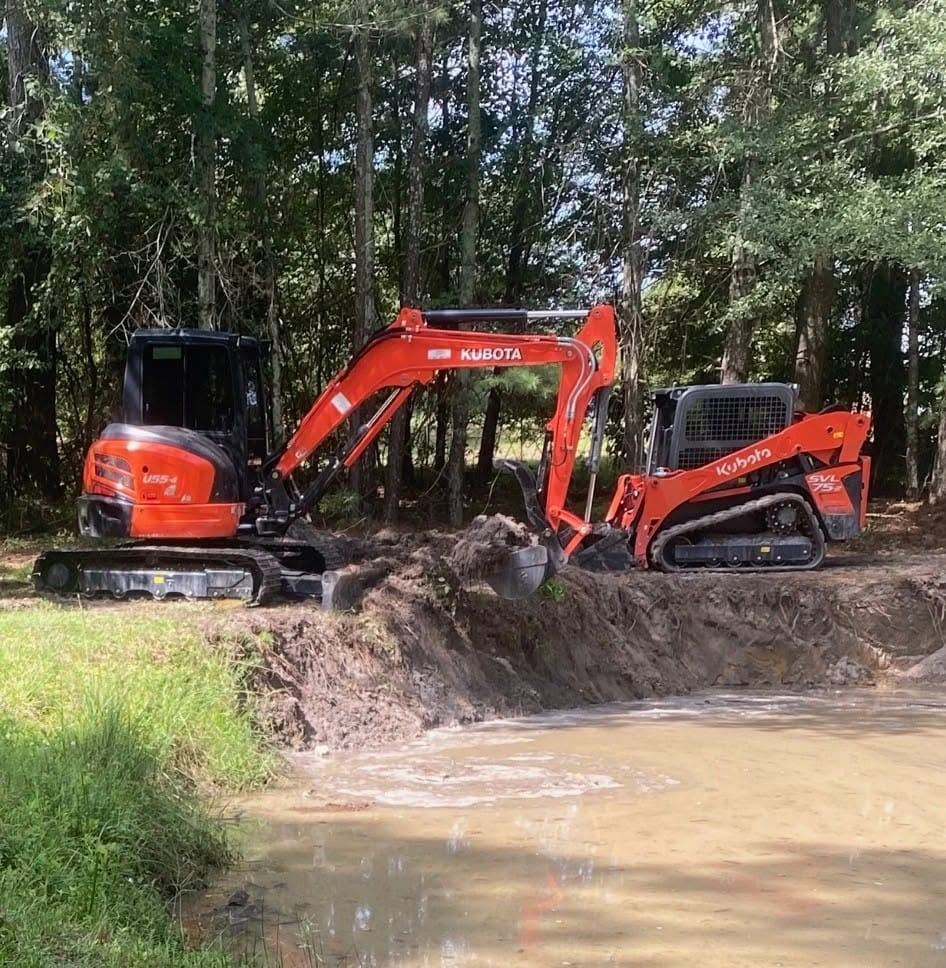
What Changes After Pond Construction Completes
Site evaluation includes soil testing to confirm clay content is sufficient for natural sealing or whether imported material is needed to prevent water loss through porous ground. Basin excavation follows contour lines to create shallow littoral zones for aquatic vegetation and deeper areas that resist freezing in winter. Dam construction uses compacted layers of clay-rich soil that withstand hydrostatic pressure and maintain structural integrity during drawdown cycles when water levels fluctuate seasonally.
Once the pond fills and stabilizes, you'll see a functional water body with defined banks, controlled overflow routes, and depths that support intended uses such as fish habitat, livestock watering, or stormwater retention. Runoff from surrounding property flows into the pond rather than eroding ditches or flooding low areas, and water remains at consistent levels except during drought or intentional drawdowns. The feature integrates with property drainage patterns and provides the capacity planned during initial design.
Pond projects also include vegetation planning, as bare banks erode without root systems to stabilize soil during wave action and water level changes. Some installations incorporate aeration systems or intake pipes for irrigation withdrawal. Final grading around the pond edge establishes mowing access and prevents sediment from washing into the basin during storm events, which extends the pond's functional lifespan before dredging becomes necessary.
Common Questions About This Service
Pond installation involves multiple design decisions that affect water retention, maintenance needs, and long-term performance across different property uses.
What determines whether a property can support a pond that holds water year-round?
Soil permeability testing reveals whether native clay content is adequate for sealing or if a liner is required, and watershed analysis confirms sufficient runoff volume to maintain levels during dry periods.
How deep should a pond be for different uses?
Livestock ponds typically require six to eight feet of depth to prevent complete freezing, while recreational ponds with fish populations need deeper zones approaching twelve feet to maintain temperature stability and oxygen levels.
What permits or regulations apply to pond construction in Apex?
Projects disturbing more than one acre or altering jurisdictional wetlands may require permits from state environmental agencies, and dam height regulations apply when embankments exceed certain thresholds.
When does maintenance become necessary after installation?
Bank vegetation establishes within the first growing season, but sediment accumulation from upstream erosion varies by watershed condition and may require dredging every ten to twenty years depending on inflow water quality.
How is overflow managed during heavy rainfall events?
Spillways are cut through undisturbed soil at elevations that release excess water before it overtops the dam, directing flow to stable discharge areas that prevent downstream erosion or flooding.
Pinesouth Earthworks evaluates topography, soil conditions, and intended pond use before excavation to ensure the finished basin performs as designed. Schedule a site evaluation to explore pond placement options and construction feasibility for your property.