
Stopping Water Where It Causes Problems
Drainage Solutions in Apex for properties with standing water, erosion channels, or basement seepage
Water pooling against foundations, flowing through crawl spaces, or saturating yards after rainfall indicates drainage systems that don't match site topography or soil infiltration rates. Pinesouth Earthworks addresses drainage issues in Apex where runoff patterns damage structures, create unusable soggy areas, or erode soil from landscapes and access routes. Grading adjustments and water management strategies redirect flow to stable discharge points before saturation undermines foundations, kills vegetation, or turns property into mud during wet seasons.
Solutions begin by identifying where water originates, how it moves across the property, and why it accumulates in problem areas instead of draining naturally. Grading corrections reshape surfaces to establish positive drainage away from structures, while swales, French drains, or catch basins intercept flow and convey it to appropriate outlets. Each approach depends on soil permeability, slope limitations, and whether surface or subsurface water is causing the issue.
Schedule a drainage assessment to identify the root cause of water accumulation on your property.
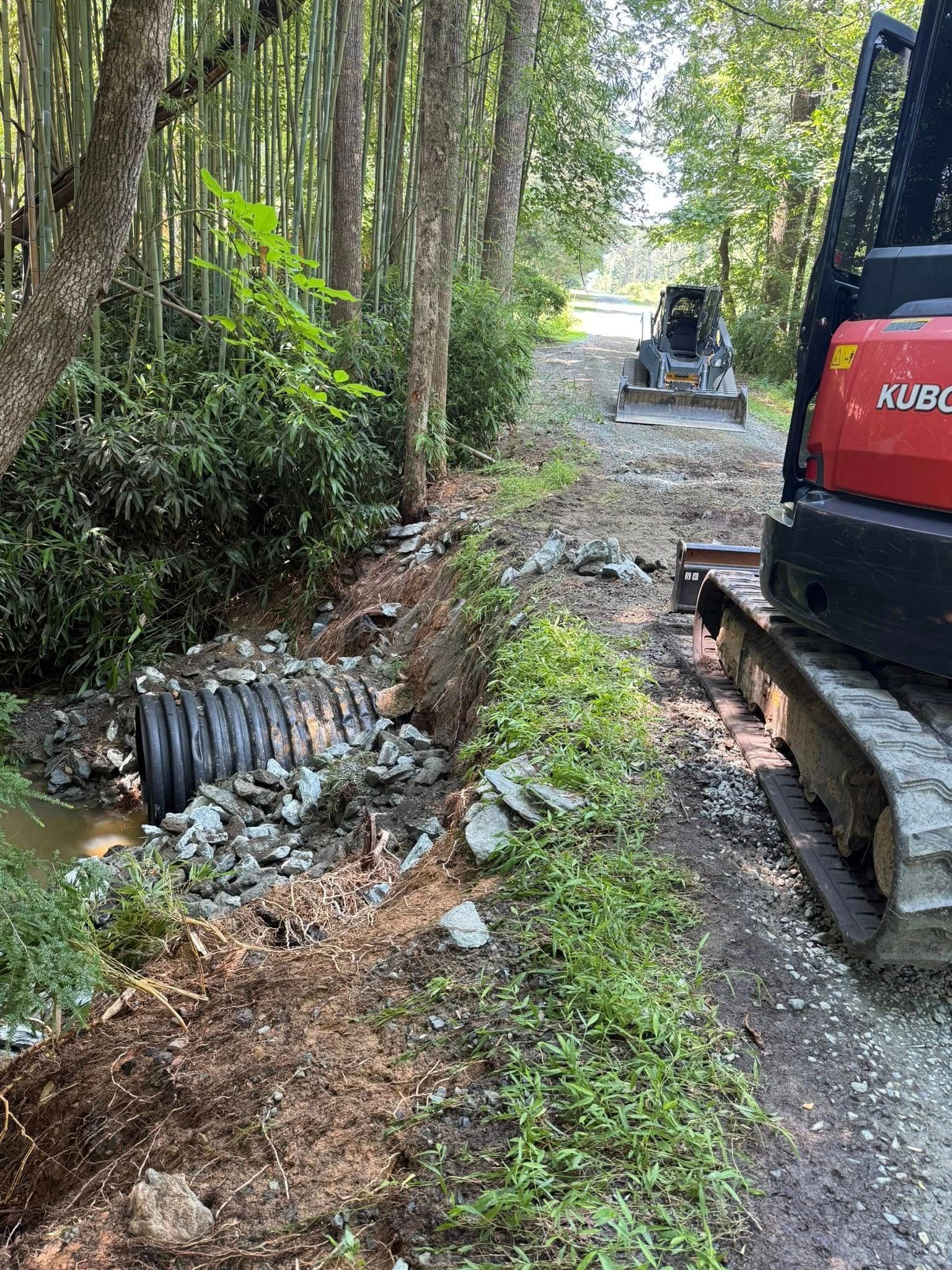
Why Drainage Problems Happen and How to Stop Them
Assessment involves observing flow patterns during rain events to determine if water arrives from upslope neighbors, concentrates due to impervious surfaces, or results from clay layers that prevent infiltration. Grading adjustments use fill material to raise low areas and reshape slopes so gravity moves water toward collection points or property edges. Subsurface drains are trenched through saturated zones and backfilled with gravel around perforated pipe that captures groundwater and conveys it to daylight outlets or storm systems.
Once drainage improvements are installed, you'll see water flowing away from foundations and problem areas instead of pooling or soaking into basements and crawl spaces. Lawns dry out faster after storms, allowing mowing and foot traffic without muddy conditions. Areas previously too wet for landscaping or recreation become usable, and erosion gullies stop expanding as concentrated flow gets dispersed or contained in stable channels.
Drainage projects also address seasonal water tables that rise during wet periods, requiring subsurface interception rather than surface grading alone. Some solutions involve installing catch basins in low areas to collect runoff and pipe it to suitable discharge locations where flow won't cause downstream erosion or flooding. Effective designs account for storm intensity and duration typical to the region, as undersized systems fail during heavy rainfall events that exceed their capacity.
Questions Before Starting Your Project
Property owners dealing with persistent water issues often need clarity about what causes drainage failures and which solutions match their specific site conditions.
What causes water to pool in the same spots after every rain?
Low areas relative to surrounding grades, compacted soil with poor infiltration, or subsurface clay layers that block downward percolation all contribute to standing water that doesn't drain naturally.
How do French drains differ from surface grading solutions?
French drains intercept subsurface groundwater through perforated pipe buried in gravel trenches, while grading reshapes surface topography to redirect runoff before it infiltrates or pools.
When should drainage work be scheduled to address wet season problems?
Late spring and summer allow contractors to observe actual flow patterns during active rain periods, though installation often occurs during drier months when equipment access doesn't create additional soil compaction.
What permits apply to drainage projects that discharge onto neighboring properties or into streams?
Concentrating flow or altering natural drainage courses may require local government approval, especially when discharge volumes increase or redirect toward jurisdictional waters in the Apex area.
How is the success of drainage improvements verified after installation?
Observing site conditions during and after significant rainfall confirms that water moves away from structures, low areas drain within reasonable timeframes, and erosion or saturation problems no longer occur.
Pinesouth Earthworks evaluates both surface runoff and subsurface water movement to design drainage systems that address the actual source of saturation and flooding. Arrange a property evaluation to review water management options tailored to your site conditions.